
Did you know you could work with an omnichannel CRM? If you’re already a CRM user in your business, chances are you have a tool that can change the way you manage your business and help you maximize your sales, but what does the transition from isolated messages to a fluid and coherent business conversation really entail?
We tell you about modern business strategies, addressing the difference between omnichannel and multichannel. We also look at the essential features of a CRM to implement an effective omnichannel strategy and examine Zoho and Mailchimp ‘s offerings as omnichannel CRMs, as well as explore the crucial role of artificial intelligence in this context.
Omnichannel VS multichannel
We talk about omnichannel CRM when we use our CRM to communicate in several ways with our customers or potential customers without leaving the CRM, reflecting these communications within the tool and being able to choose each way depending on what objective we pursue, user preferences or even other criteria. For example, making phone calls, exchanging WhatsApp messages, direct messages through social networks, sending emails, etc.
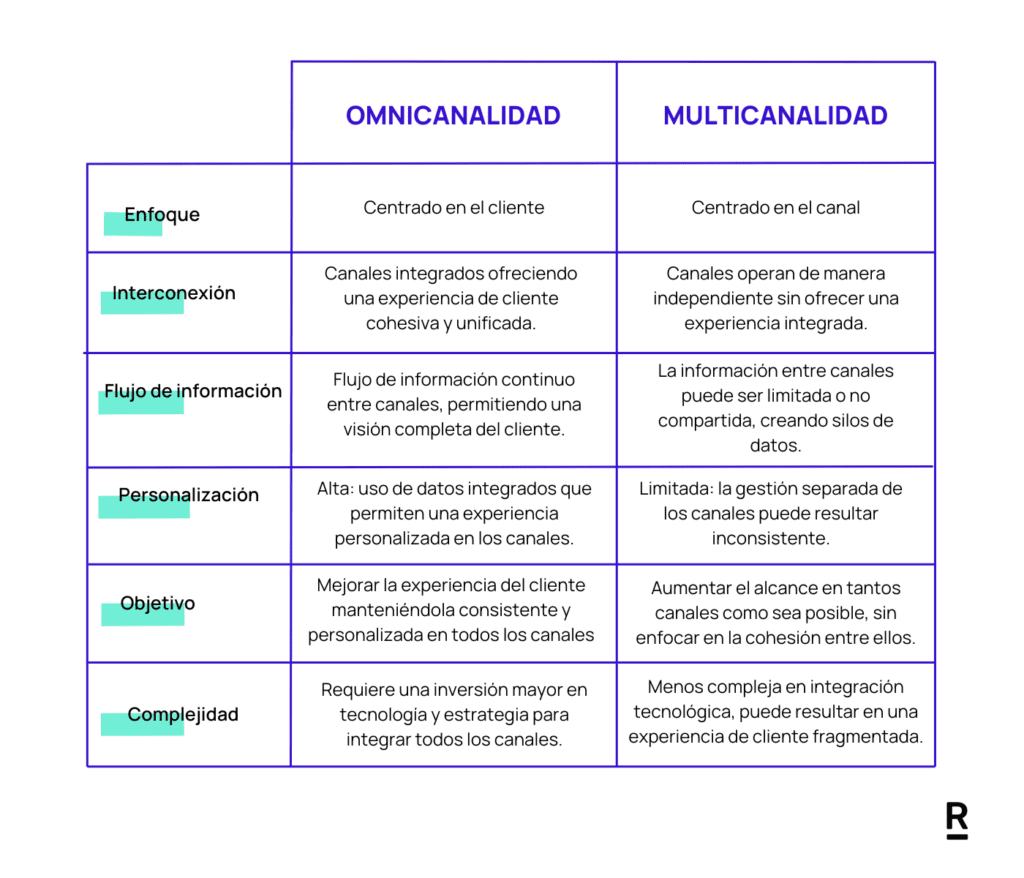
In a multichannel approach, each communication channel operates independently, which means that interactions are not integrated with each other. For example, a customer might communicate with the company via email and then use social media to make a different query, without a seamless connection between the two interactions.
The key feature of omnichannel CRM is the ability to consolidate multiple communication channels. This goes beyond simple management; it involves understanding customer interactions. From the first inquiry to the follow-up after the sale, each touchpoint is woven together in a coherent way creating personalized experiences. This approach responds to the need of today’s business landscape, which prioritizes customer satisfaction as a central pillar.
The main difference between multichannel and omnichannel CRM lies in the integration and consistency of the customer experience. While multichannel CRM offers multiple customer touch points, omnichannel CRM goes further by ensuring that these touch points are interconnected and provide a unified experience. As such, adopting an omnichannel approach can lead to greater customer retention and loyalty, a competitive advantage in an increasingly customer experience-centric marketplace.
Attend the free webinar on Omnichannel CRM to empower your business!
What an omnichannel CRM is for
Let’s take a look at some of the most valuable advantages offered by a tool of this caliber:
- Centralization of information on a single platform and assurance of quick responses to customer inquiries: CRM acts as a centralized source of data, which facilitates the integration of all processes and data on a single platform. This ensures that marketing, sales, customer service and customer experience teams can access information efficiently. As a result, information requests are streamlined at every stage of the sales cycle.
- Improved communication between customers and the company, and therefore customer satisfaction: With the variety of communication channels offered by an omnichannel CRM, customers are given the flexibility to communicate according to their preferences. This is especially useful in companies that prioritize the personalization of the customer experience.
- Optimization of customer interaction records: Each interaction with a customer generates records, as in a conventional CRM, but with the advantage that an omnichannel CRM expands the scope of these records by using various means of communication. This makes it possible to analyze communication patterns and customer behavior, which in turn influences lead acquisition and conversion.
- Customer-focused reps: By consolidating account management on a single platform, sales reps can focus on nurturing the customer relationship. With detailed records of customer activity, they can identify when to send relevant information, improving the chances of conversion. In addition, employee training becomes more efficient by focusing on a single platform.
- Streamlining service through process automation: Automating processes in an omnichannel CRM brings a number of benefits, such as faster and more efficient responses to customer inquiries, simplified operations for representatives in all areas, and more effective customer management. This translates into higher customer satisfaction and increased consumption in the long run.
What does your CRM have to have to be omnichannel?
For a CRM to be truly omnichannel and deliver a holistic customer experience, it must have a number of key features:
- Integration of multiple communication channels: The CRM must be able to integrate a variety of communication channels, such as email, phone, live chat, social media, and text messaging, among others. This ensures that customers can interact with the company through the channel they prefer.
- Data consolidation: It is critical that CRM can collect and consolidate data from all communication channels into a single platform. This enables a unified view of customer interactions, facilitating personalization and informed decision making.
- Flexibility and adaptability: The CRM must be flexible enough to adapt to changing customer needs and preferences. It must allow the configuration of customized rules and workflows for each communication channel and type of interaction.
- Advanced data analytics: An omnichannel CRM must have advanced data analytics capabilities to identify customer behavior patterns, trends and opportunities for improvement in the customer experience. This includes the ability to perform predictive analytics and customer segmentation.
- Process automation: Process automation is essential to streamline operations and improve efficiency in managing customer interactions. CRM should enable automation of repetitive tasks, such as sending follow-up emails or assigning customer service tickets.
Join the omnichannel CRM workshop on April 18 and boost your business!
AI and omnichannel
Today, the integration of Artificial Intelligence is a fundamental pillar in the omnichannel strategy of companies, transforming the interaction with customers and optimizing logistics processes to offer a superior shopping experience.
AI has revolutionized CRM and the way organizations understand their users, enabling deeper personalization and a richer shopping experience across multiple channels. Service automation, such as chatbots, has proven to be especially effective in providing quick responses to shoppers, thereby strengthening customer loyalty and satisfaction.
But the impact of AI is not limited to customer service. It has also driven significant advances in the prediction and efficiency of inventory and supply chain management. Using machine learning algorithms, AI makes accurate predictions of demand, optimizing inventory management and supply chain planning to avoid problems such as out-of-stocks and overstocks.
In addition, AI has enabled a number of specific uses that further empower companies’ omnichannel strategy:
- Content creation: AI algorithms can optimize the creation of blogs, social media strategies and SEO content, improving online visibility and reaching target audiences more effectively.
- Personalization: AI makes it possible to identify individual patterns in data, empowering personalization and enabling companies to offer services tailored to each customer’s specific preferences and behaviors.
- Digital marketing: AI-driven data analytics is critical for effective digital marketing campaigns, optimizing advertising, sponsored content and email marketing.
- Logistics: The implementation of advanced technology, thanks to AI, has made it possible to optimize warehousing, delivery routes and inventory control, improving delivery efficiency and reducing waiting times.
- Customer service: Automated chats and chatbots streamline responses to frequently asked questions, making it easier for customers to make purchasing decisions.
Ultimately, AI integration not only boosts companies’ omnichannel strategy, but also improves operational efficiency and customer experience across all touch points with the brand.
Zoho and Mailchimp as omnichannel CRMs
When it comes to choosing an omnichannel CRM tool, Zoho CRM stands out for its AI-powered capabilities, which offer a range of benefits for businesses.
In the case of Zoho CRM, its AI has elevated the functionality of the system, providing more accurate and valuable data analysis for users. For example, it predicts at what time it is best to call each contact by phone, or the likelihood of conversion.
Aspects such as predictive analytics allow companies to make accurate predictions about future business performance based on customer behavior patterns and sales trends.
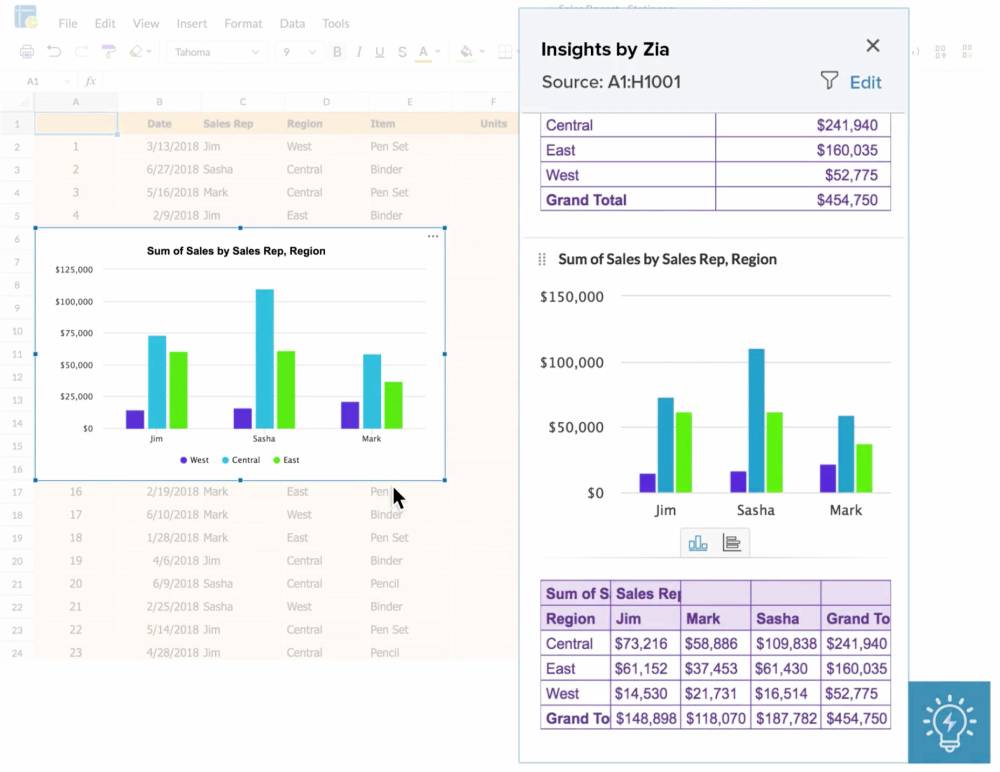
Zoho CRM’s intelligent automation streamlines repetitive tasks and allows users to focus on crucial customer interactions. In addition, personalization is enhanced with recommendations based on customer data, delivering more tailored and satisfying experiences. Zoho CRM’ s AI also analyzes intentionality in customer communications, helping to identify challenges and opportunities for improvement in the interaction.
Zoho CRM demonstrates how AI can power the functionality of omnichannel CRM tools, giving businesses the ability to make informed decisions, personalize experiences and optimize marketing strategies to meet changing customer needs in an increasingly interconnected world.
As a Zoho partner, we offer services ranging from strategic consulting and custom configuration to campaign management and data analysis. We can help you maximize your use of Zoho CRM and move from isolated messages to a business conversation, so don’t be shy to ask us your questions! 😄